Tree planting on Scenic Rim properties is one of the most rewarding investments you can make for the land, for wildlife, and for long-term property value. But most landowners make one critical mistake. They rush to plant without doing the necessary prep work.
Cambium Land Management has planted thousands of native trees across Scenic Rim farms, creek lines, and restoration sites. In that time, we've learned that three things determine whether your trees thrive or fail. Timing, site preparation, anc species selection.
Whether you're restoring riparian habitat, screening a fenceline, or establishing a productive orchard, here's how to do it properly.
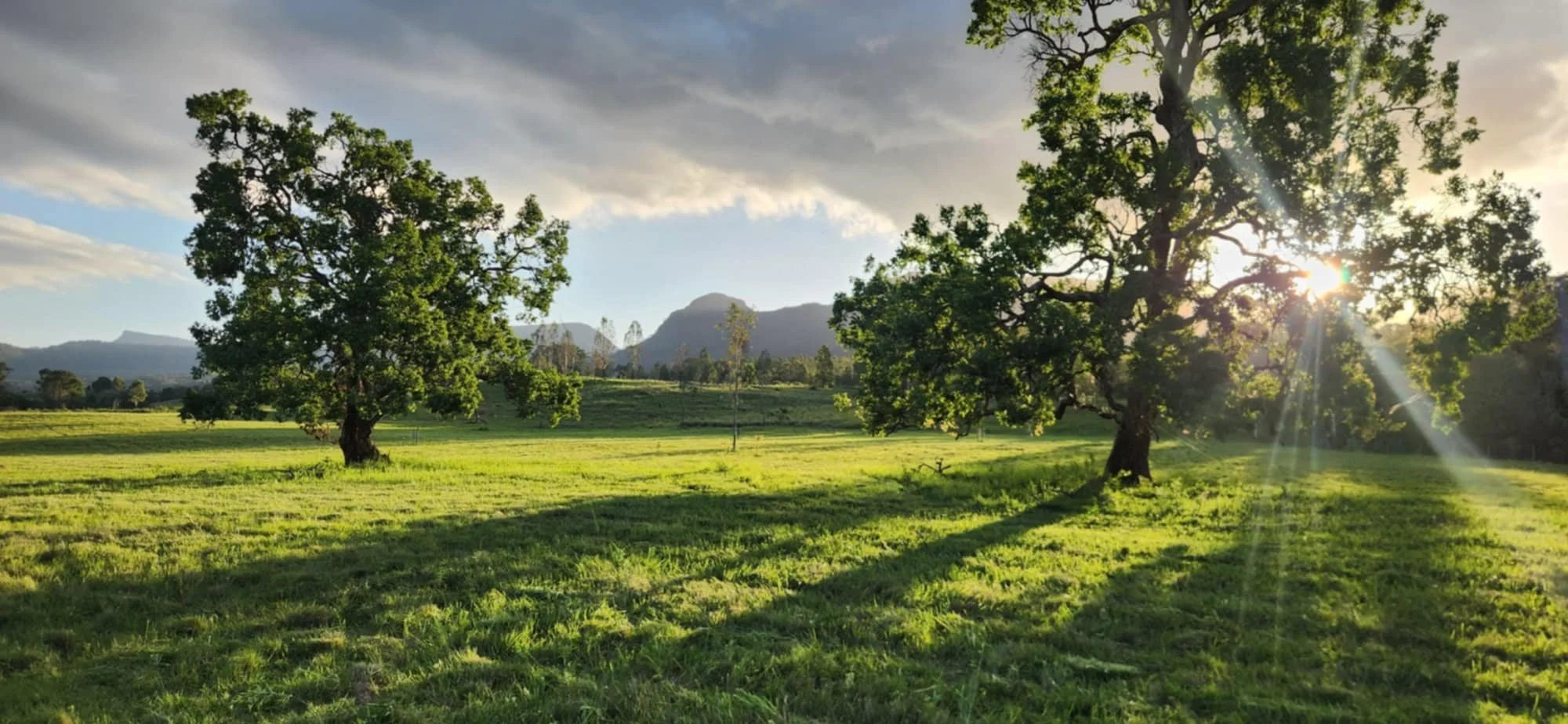
Legacy paddock trees are a important source of local native seeds for natural regeneration and critical habitat for native animals, especially in heavily-cleared agricultural areas where the distance between forested areas can be massive. These should be priortised for safeguarding
Right tree, right place.
Just because you picked a native plant at your local tubestock nursery does not mean it will thrive on your farm. The Scenic Rim includes a diverse range of ecosystems, including a mix of rainforest gullies, dry ridgelines, sclerophyll forest and grasslands. Matching species to site conditions (soil, moisture, light) is the key to survival and fast establishment.
Fast growth isn't about fertiliser. It is about putting the right tree in the right place.
Native Trees for Common Scenic Rim Land Types:
For dry hillsides and paddocks:
Eucalyptus crebra (Narrow-leaved Ironbark)
Corymbia citriodora (Spotted Gum)
Callistemon viminalis (Weeping Bottlebrush – for smaller areas)
Eucalyptus melanophloia (Silver-leaved Ironbark)
For creek lines and moist zones:
Melaleuca viminalis (Creek Bottlebrush)
Lophostemon confertus (Brush Box)
Ficus coronata (Creek Sandpaper Fig)
Alphitonia excelsa (Red Ash/Soap Tree)
Flindersia australis (Crow's Ash)
Archontophoenix cunninghamiana (Bangalow Palm)
Araucaria cunninghamii (Hoop Pine)
For habitat corridors and hedges:
Hakea salicifolia (Willow-leaved Hakea)
Eucalyptus microcorys (Tallowood)
Dodonaea triquetra (Common Hop Bush)
Casuarina cunninghamiana (River She-oak)
Allocasuarina torulosa (Forest She-oak)
Tip: Mix up your selection with a canopy species, a mid-storey, and a shrub or grass to mimic natural structure.
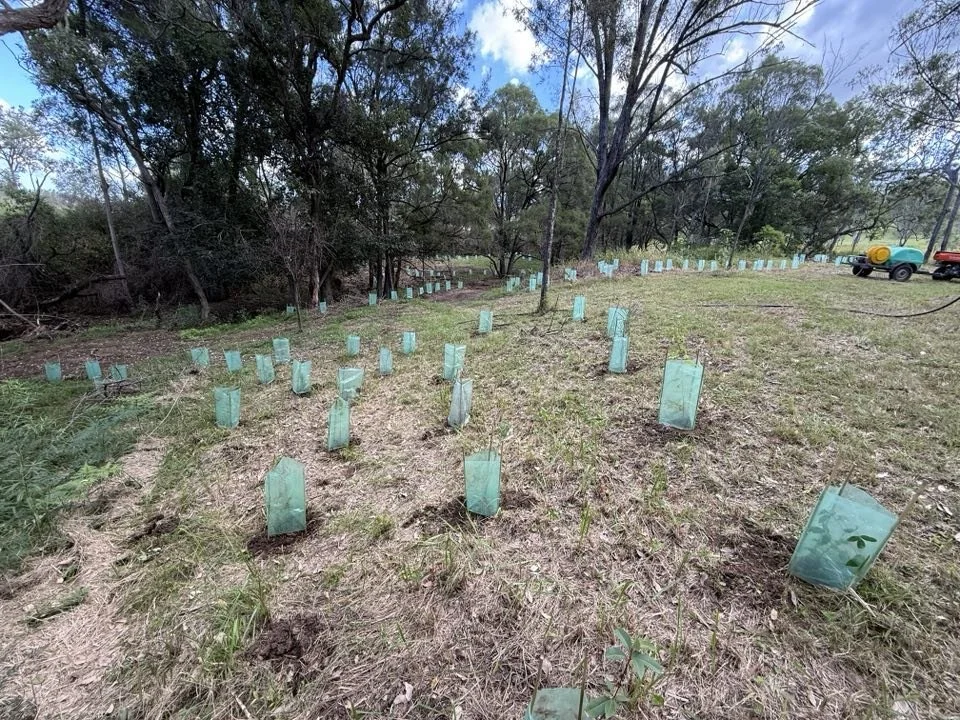
This whole site was covered in dense thick lantana. An invasive weed management program was completed and then a range of local native species planted.
2. The Best Time to Plant in the Scenic Rim
In the Scenic Rim, we are blessed with decent planting conditions pretty much all year round. Though we recommend avoiding the peak-summer months of January and February due to the heat, unless there has been a consistent tempo of rainy weather and good rain (20-30mm per week at least) is expected for the next 2–3 weeks.
Our favourite time to plant native tubestock on Scenic Rim farms is late autumn to early spring.
Plant after the first decent autumn rain, or anytime the soil is moist and cool. This gives tubestock time to establish roots before the dry or hot season. You can dramatically reduce how much watering you need to do if you are strategic about when you plant.
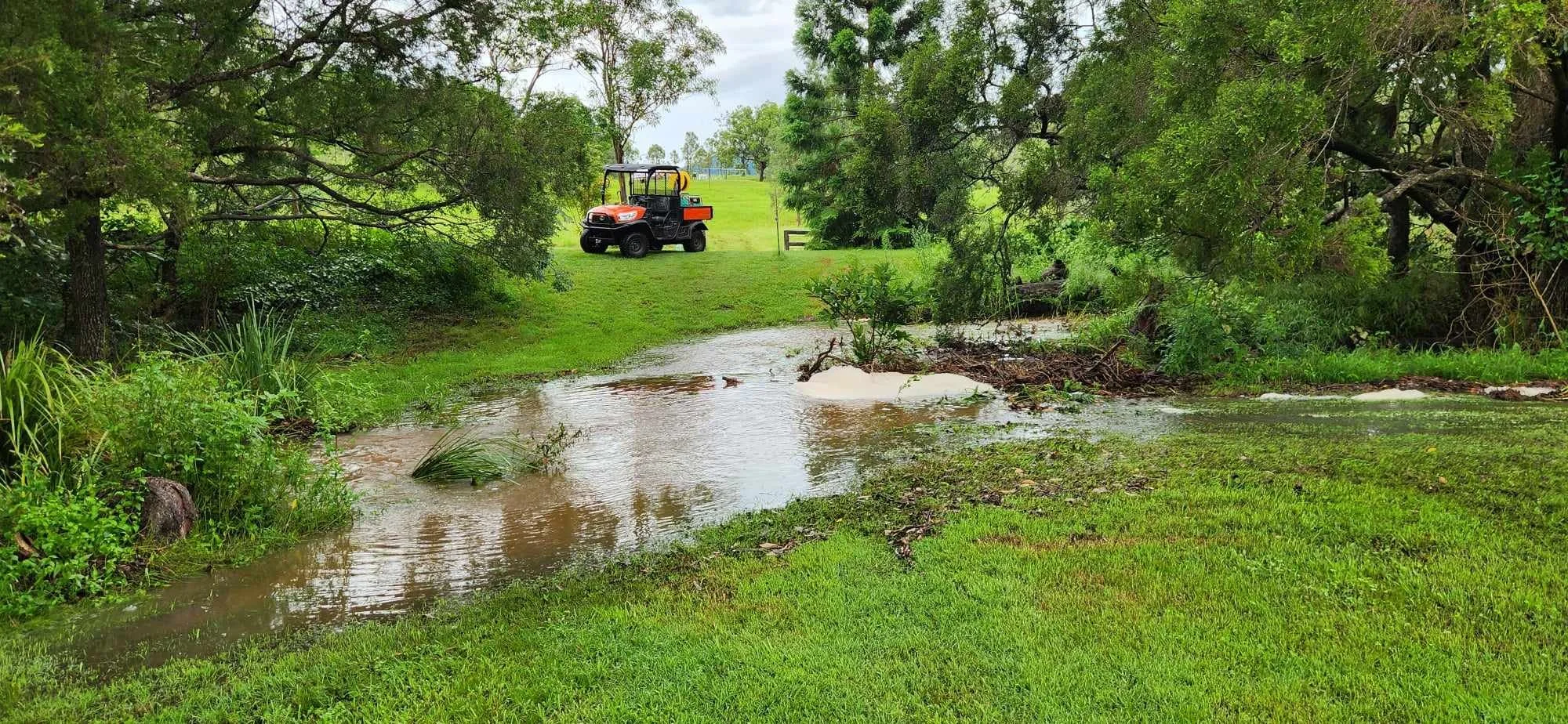
Consider the weather forecast before you plant native trees in the Scenic Rim. Summer storms can cause temporary flooding of project areas but can eliminate the need to water any of your new native plants.
3. Prepare the Native Plant Project Area
Invasive weed control before planting is essential.
Invasive environmental weeds like Lantana, Red Ochna, Cat's Claw Creeper and Chinese Celtis can smother your young trees before they are properly established. We like the following technique to balance efficiency of tree planting and minimal ecological harm.
Slash, mow or whipper snip the project area.
Hand-clear or spot spray with herbicides (if appropriate and you are comfortable using herbicides) 1m diameter circles at each planting spot 2–3 weeks before planting.
Mulch the 1m planting circle with the grass you slashed or bring in a budget mulch. We recommend forest mulch that has been aged to Australian standards by a reputable supplier to minimise the potential for invasive weed spread.
Pre-dig holes
Especially in hard or compacted ground. Dig to at least 1.5x the depth of the pot and loosen the soil. Most native tubestock purchased from a native Scenic Rim nursery are in pots no more than 100mm deep, so you don't have to dig a crater. A small 150–200mm hole (a standard shovel depth) is going to be perfect.
Use tree guards and forest mulch
Tree guards protect from wallabies, roos, and accidental mower damage. They also help protect from the sun by reflecting light and creating a more favourable microclimate for the newly planted tree. Some native tree guards work to reflect sunlight, filter UV rays and increase humidity.
If you are working on a larger scale (multiple acres or hectares of revegetation) then mulching and installing tree guards can add significant cost and time to your project. Unless you have significant browse pressure from roos or wallabies, we find not using tree guards perfectly fine. Just make sure you clearly mark out your project area so nothing gets mowed or whipper snipped.
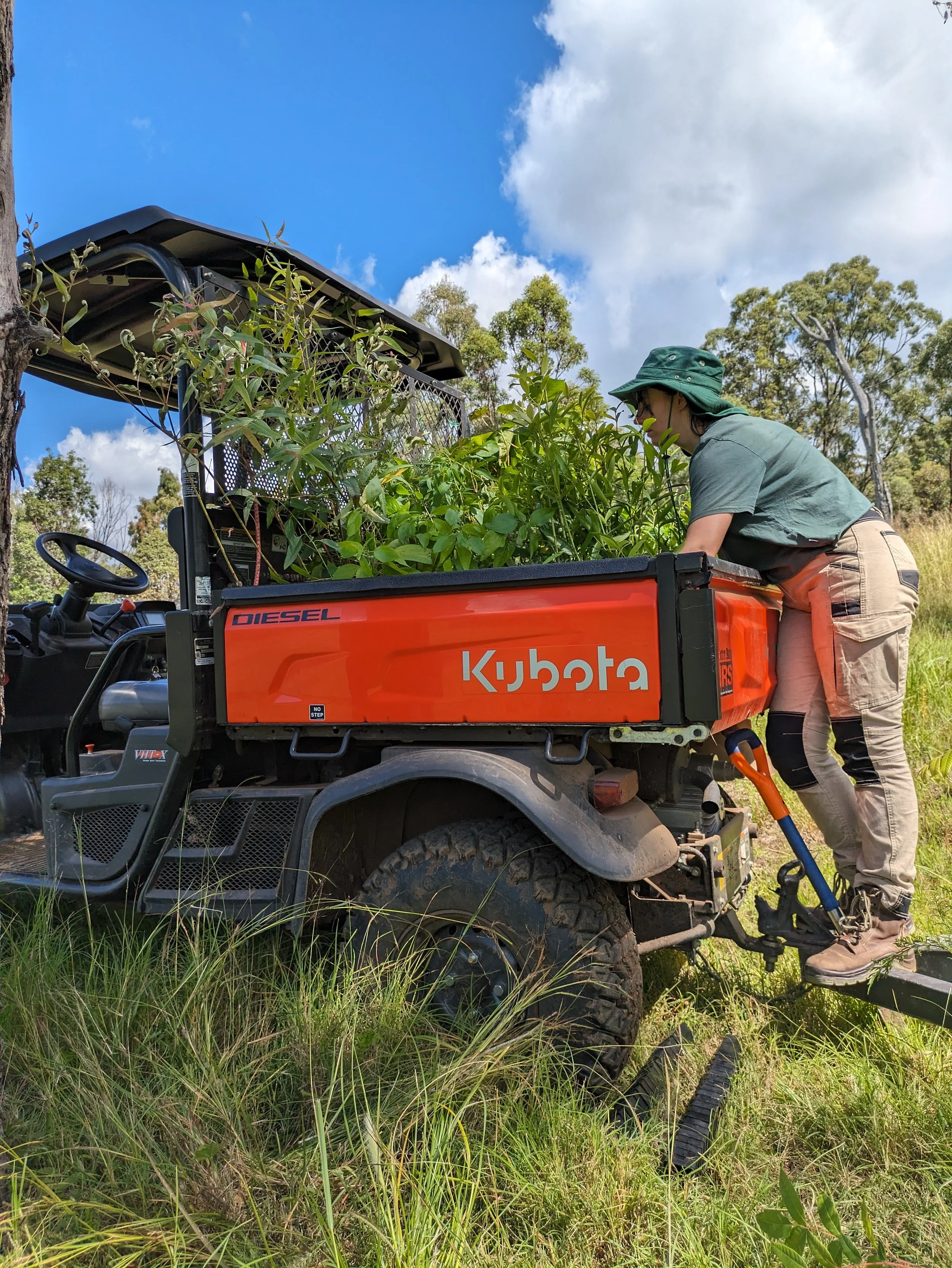
Native tubestock ready to go in the ground — Scenic Rim tree planting project
💧 Watering & Aftercare
Water in at planting with at least 5–10L per tree.
Water weekly in the first 4–6 weeks if there's no rain, especially during summer or heat waves.
Inspect monthly for weed competition or signs of stress.
Replace guards and re-mulch in spring if needed.
Quick note: If one tree is dying in your planting area, it's probably just that tree. We aim for a 90% survival rate in all our tree planting projects, so losing one or two is expected. If a whole area of planted trees is dying, then you might have a problem.
🎯 Planting for Specific Goals
1. Erosion Control
For stabilising slopes and preventing soil erosion, especially along creek lines and river banks:
Lomandra longifolia (Spiny-headed Mat-rush)
Carex appressa (Tall Sedge) – ideal for wet zones and creeklines, holds soil in soft ground
Melaleuca viminalis (Creek Bottlebrush) – useful along active erosion channels and overland flow paths
Casuarina cunninghamiana (River She-oak)
These species have deep root systems that bind the soil effectively. The Lomandra and Carex also have an abundance of strappy leaves which help to slow fast-moving water during heavy rain events.
2. Windbreaks and Shelterbelts
To protect crops and livestock from some of the strong prevailing winds experienced across the Scenic Rim:
Acacia melanoxylon (Blackwood)
Eucalyptus moluccana (Grey Box)
Callistemon salignus (Willow Bottlebrush)
Plant in staggered rows to create an effective barrier. The goal here is density, but you don't want a shield wall. You want to slow the movement of air across your property, not create a giant impenetrable wall.
3. Wildlife Habitat
To attract and support native fauna:
Melaleuca quinquenervia (Broad-leaved Paperbark) – attracts nectar-feeding birds
Ficus rubiginosa (Port Jackson Fig) – provides food for fruit-eating birds and mammals
Banksia integrifolia (Coast Banksia) – supports a variety of pollinators
Incorporate a mix of flowering and fruiting species to provide year-round resources.
4. Aesthetic Landscaping
For visual appeal and shade:
Grevillea robusta (Silky Oak) – striking foliage and flowers
Brachychiton acerifolius (Illawarra Flame Tree) – vibrant red flowers
Syzygium australe (Brush Cherry) – dense foliage suitable for hedging
These species offer both beauty and functionality in garden settings.
⚠️ Common Mistakes to Avoid
Over-planting without capacity to maintain. Start small and scale up each season. Tree planting is physical work and you don't want to create more work than you can handle.
Using trees from the wrong region. Stick to local provenance when possible. A Spotted Gum sapling is native to Australia, but tubestock sourced from Western Australia has evolved to thrive in a very different environment than the Scenic Rim. Try to source your plants from local nurseries in your region.
Skipping site prep. It's 80% of the work. The planting is the easy part.
Want Help Getting It Right?
We've planted thousands of trees across the Scenic Rim — along creek lines, through thick lantana, in exposed paddocks and steep gullies. We know which species survive where, and we can source local provenance tubestock suited to your exact site.
Whether you need expert advice, a planting crew, or someone to manage the full project from site prep to aftercare, Cambium Land Management can help.
We offer:
On-site assessments and species recommendations
End-to-end native tree planting projects
Ongoing invasive weed management to protect your investment